
What to Look for When Buying a Used Car (and Why Buying from a Dealer Might Just Be Smarter)
- Jakobas Kenzo
- Oct 22, 2025
- 3 min read

Buying a used car can feel like walking a tightrope — one step toward a great deal or one slip into endless repairs. Whether you’re after a budget commuter or something sporty with a bit of soul, knowing what to look for can save you from headaches (and your wallet from heartbreak).
But here’s the thing — not all used car experiences are created equal. There’s a big difference between picking up a ride from your buddy’s cousin on Facebook Marketplace and driving off a certified lot with paperwork, inspection, and peace of mind. Let’s break it down.
🔍 Step One: Do Your Homework
Before you even start shopping, it helps to know what you want and what it’s really worth. Check values on trusted sources like Kelley Blue Book or Edmunds, and compare listings in your area. If a deal looks too good to be true, it usually is.
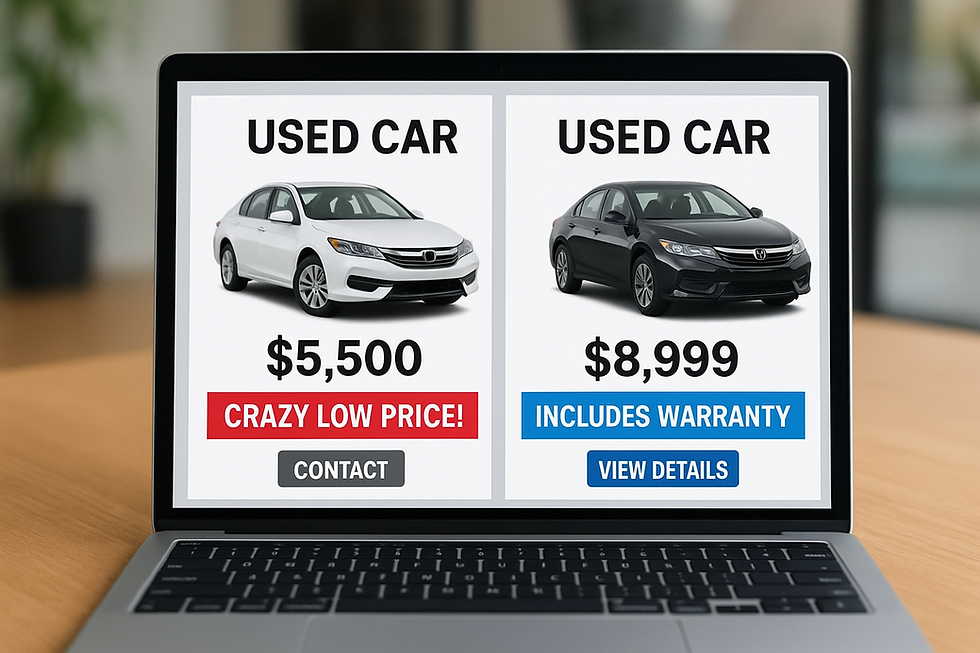
Dealerships often price their inventory close to market value — sure, you might not get that “crazy low” private-party price, but that’s because dealers actually inspect, recondition, and stand behind their vehicles. There’s a bit of a safety net baked into that sticker price.
🧰 Step Two: Inspect Everything
When you check out a car, look for signs of wear: uneven tire tread, paint mismatches, or oil leaks under the hood. Always ask about the maintenance history — a well-documented car is a cared-for car.
Here’s where dealerships quietly shine. Many used car dealers (especially reputable ones) go through multi-point inspections before a car hits the lot. That means the brakes, fluids, suspension, and electronics have already been checked — often saving you from finding out the hard way later.

📄 Step Three: Check the Paperwork
Title, registration, and service records tell the real story. Private sellers might “forget” to mention that rebuilt title or missing smog certificate — not because they’re shady, but because most regular people aren’t experts in DMV paperwork.
Dealerships, on the other hand, handle this part for you. You don’t need to chase down missing signatures, wait in line at the DMV, or guess whether the paperwork is legit. Everything’s clean, legal, and ready to roll.
💳 Step Four: Financing & Warranty Options
When you buy private-party, it’s usually cash only — no financing, no protection, and no take-backs. Dealers can set you up with flexible financing options and sometimes even limited warranties or service contracts. That’s huge if you’re not trying to drop a full payment all at once.
Sure, a private seller might shave a few hundred off the price… but when your transmission goes out a month later, there’s no one to call except your mechanic. With a dealer, you’ve got options (and accountability).

🚗 Step Five: Trust Your Gut
No matter where you buy, listen to your instincts. If the seller seems dodgy, the story doesn’t add up, or the car’s condition doesn’t match the photos, walk away.
But if you want to skip the guesswork altogether, a reputable used car dealer offers consistency — clear history reports, clean titles, professional inspections, and a smoother process from start to finish. It’s not just about the car you buy; it’s about who’s standing behind it when you drive away.
🏁 Final Thoughts
Buying used shouldn’t be stressful. Whether you’re upgrading or buying your first ride, remember: a little peace of mind goes a long way.And while private-party deals can look tempting, there’s something to be said for walking into a dealership, finding the right car, and knowing it’s been vetted by pros.
Because let’s be real — sometimes it’s nice to know someone’s already done the worrying for you.


Comments